
Founder & CEO of Swingo
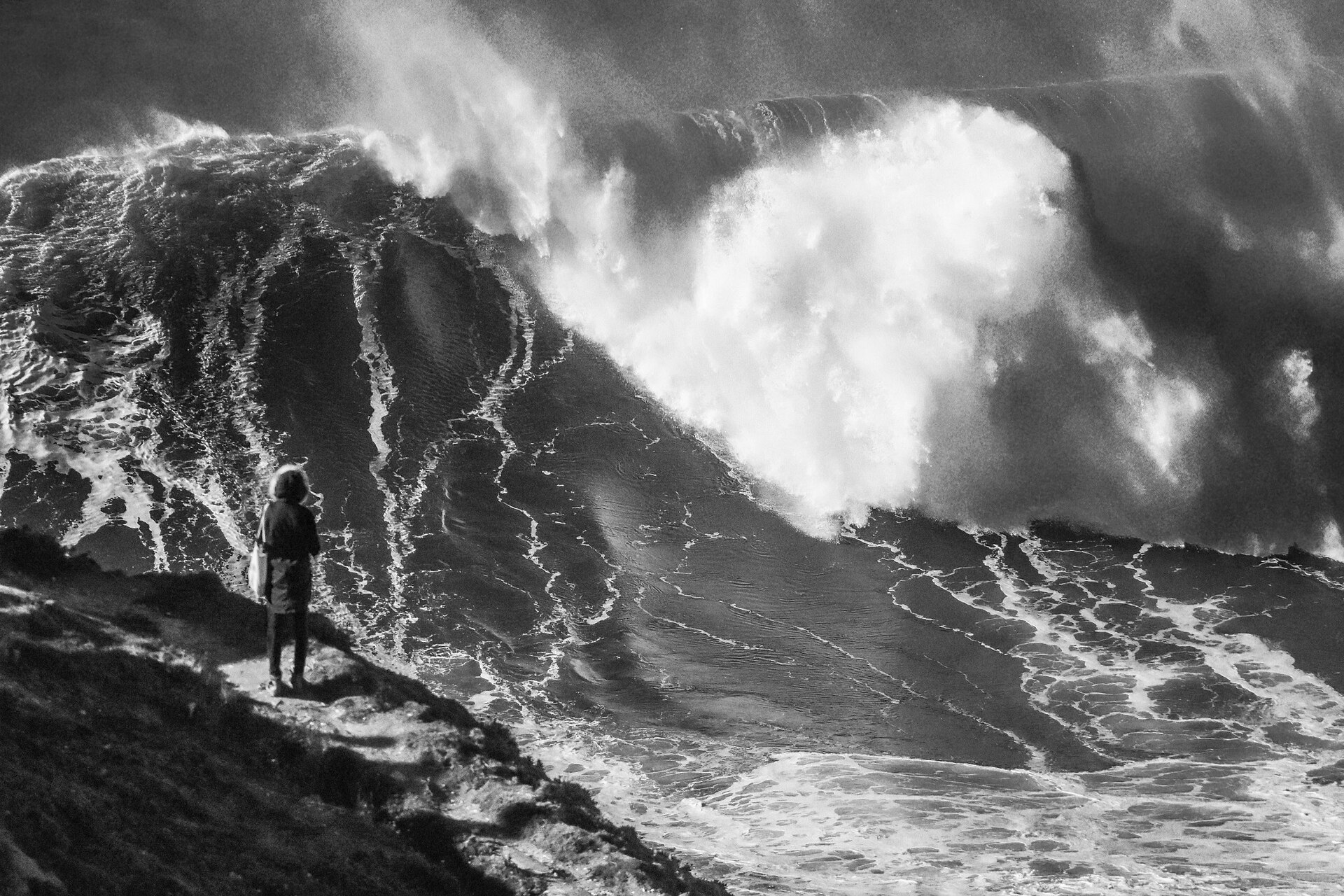
The honest question is not whether Nazaré is worth it, but what you will see on the day you go. The record waves arrive roughly from October to March, when Atlantic storms feed the canyon offshore. In July the same beach is calm and blue. Timing, and how long you linger, make this day.
Most people see this stretch of coast from the window of a shared van, and the most common thing they say afterwards is that it felt rushed. Less than an hour at Fátima. A guide translating everything into three languages for half a minibus. A fixed clock that decides for you when you leave the cliff at Nazaré, whether or not the surf is doing anything that day. None of that is a small complaint. The two things that actually make this day worth doing, timing the waves and choosing how long to stand still, are exactly the two things a fixed-schedule group cannot give you.
Here is the part the brochures skip. On 29 October 2020, the German surfer Sebastian Steudtner rode an 86 foot wave at Nazaré's Praia do Norte that the World Surf League and Guinness World Records certified as the largest wave ever surfed. In February 2024 he rode one measured at 93.73 feet by a Porsche drone, a ride that is still awaiting official ratification. Enormous numbers. But those waves only arrive roughly from October to March, when Atlantic storms feed the underwater canyon offshore. Turn up in July and the same beach is calm and blue. So the honest question is not whether Nazaré is worth it. It is what you will actually see on the day you go, and who is reading the forecast for you. This guide answers that, and the same for Óbidos, Batalha and Fátima, with current prices, hours and seasons, so you can decide what your day should be before you book it.
What this trip really is, and what it is not
This is a full day out of Lisbon that strings together four very different places within about 120 km to the north: the giant-wave coast at Nazaré, the walled medieval town of Óbidos, the UNESCO-listed Batalha Monastery, and, if you add it, the pilgrimage sanctuary at Fátima. The base trip is the three coastal and medieval stops. Fátima is the fourth, optional, and it changes the character of the day.
What it is not is a deep dive into any single one of them. You are not spending three hours inside Batalha or a slow afternoon getting lost in Óbidos. You are getting a real, unhurried hour or so at each, with the driving and the timing handled, and the freedom to stretch one stop if it grabs you. If your idea of a good day is one town, one long lunch and nothing on a schedule, this is not that day, and a single-destination trip to Sintra or Évora would suit you better. If you want range, the coast and the medieval icons and the option of the sanctuary, in one private day on your own clock, this is the trip.
Getting there from Lisbon
By car, it is straightforward: the A8 motorway runs north and links all four stops, with Óbidos about an hour from Lisbon, Nazaré about an hour and a half, and Batalha and Fátima a little beyond. The base loop is roughly 290 km round trip; adding Fátima takes it to about 320 km.
By public transport, it is genuinely awkward to combine in a day. Buses serve each town from Lisbon, but there is no rail station in Batalha, the nearest being Leiria, and chaining Nazaré, Óbidos and Batalha together on public schedules eats the day and leaves you waiting at connections rather than standing on the cliff when the light is good. This is the clearest case for either renting a car or going private. A private driver-guide does the A8 in the order that fits the surf forecast and the crowds, which a fixed bus timetable cannot.
Nazaré: the waves, and what you will actually see
Nazaré is the reason the season matters. Just offshore sits one of the largest underwater canyons in Europe, dropping to around 5 km deep, and it funnels and amplifies Atlantic swell onto a single beach, the Praia do Norte. That is the physics behind the record rides. Garrett McNamara put the place on the map with a 78 foot wave on 1 November 2011; Steudtner set the certified 86 foot record on 29 October 2020; and on the women's side, Maya Gabeira's 73.5 foot ride in February 2020 holds the female record at the same beach.
The catch, again, is timing. The giant waves break mainly from October to March. In summer the Praia do Norte is calm, and you will see a beautiful coastline rather than a wall of water. You watch the surf from the clifftop promontory at the Sítio, around the Forte de São Miguel Arcanjo and its lighthouse, reached on foot or by the old funicular from the lower town. On a big day this is one of the most dramatic things you can witness in Portugal. The honest value of going private here is simple: on the days the swell is up, someone who reads the forecast can put you on that cliff at the right hour, and on the days it is flat, can tell you so and spend the time on the beach and a seafood lunch instead of selling you a wave that is not there.
Óbidos: walls, ginjinha, and one real caution
Óbidos is a small walled town of whitewashed houses trimmed in blue and yellow, about an hour north of Lisbon. King Dinis gave it to Queen Isabel as a wedding gift in 1282, and it stayed the property of Portugal's queens for centuries, which is why it is still called the town of queens. The set piece is the medieval wall circuit, about 1.5 km, and the ritual is ginja, the local sour-cherry liqueur, served in a small edible chocolate cup at stalls along the main street, Rua Direita.
The caution is real and worth stating plainly. The wall walk is free and open, and it is also completely unguarded: a narrow path, no railing on the drop into the town, walls up to around 13 m high, and stone that turns slick in the rain. Local accounts include occasional fatal falls. It is spectacular and most visitors are fine, but it is not for young children or anyone uneasy with heights, and it is not the place for distracted phone photos near the edge. A guide will point you to the calmer eastern stretch and the safe access points rather than the crowded gate.
Batalha: a UNESCO monastery, and what the ticket buys
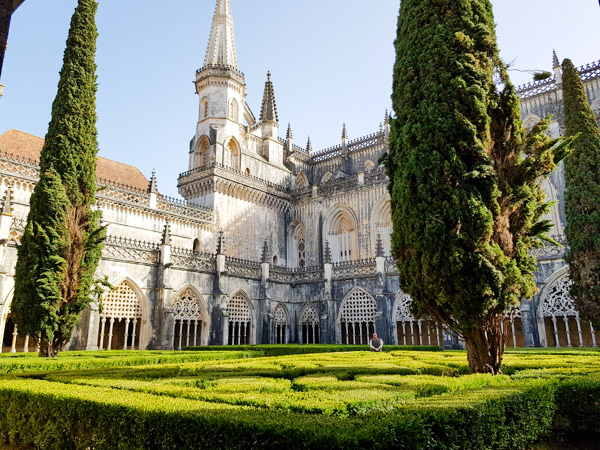
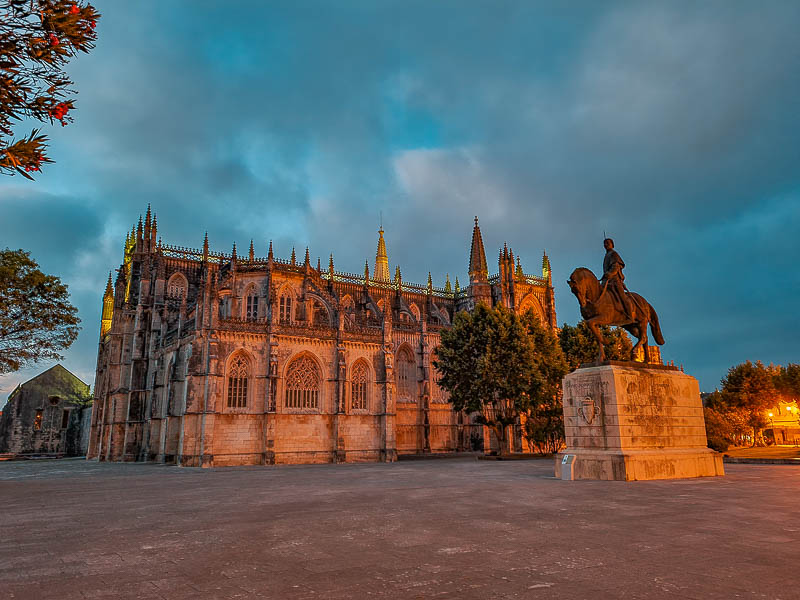
The Mosteiro da Batalha, properly Santa Maria da Vitória, was built after the 1385 Battle of Aljubarrota, the victory that secured Portugal's independence, on a vow by King João I. Work began in the 1380s and ran for more than 150 years, which is why the building moves from soaring Gothic into the lacework of the Manueline. It has been a UNESCO World Heritage Site since 1983. The highlights are the Founder's Chapel, with the joined tomb of João I and Philippa of Lancaster, the two cloisters, and the roofless Imperfect Chapels, an octagon left open to the sky when the money moved to the Jerónimos monastery in Lisbon. In the chapter house lies Portugal's Tomb of the Unknown Soldier, watched continuously, with a short changing of the guard about every hour.
On the practical side, two things matter and both changed recently. Entry to the church itself is free. The paid sections cost 15 euros for the standard adult ticket as of 2025, after Museus e Monumentos de Portugal raised the price from 10 euros. Opening hours are 09:00 to 18:00 from 16 October to 31 March (last entry 17:30), and 09:00 to 18:30 from 1 April to 15 October (last entry 18:00); it closes on 1 January, Easter Sunday, 1 May and 25 December. On Swingo's tour, the Batalha ticket is already included and built into the price, so you do not queue or pay again. If you have seen Alcobaça nearby and are wondering whether Batalha repeats it, it does not: Batalha is the finer building of the two, and the one worth the stop.
Fátima: the fourth stop, and an honest call
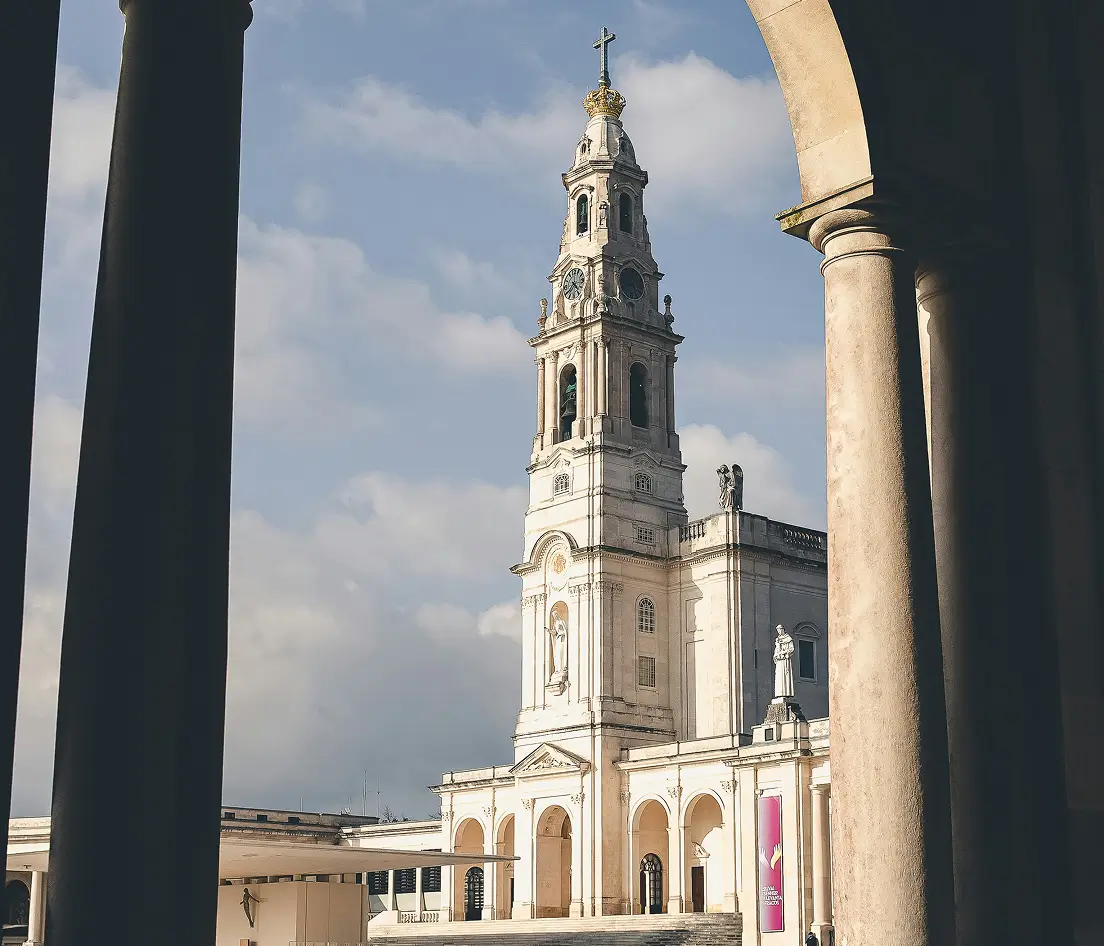
Fátima is the decision that defines your day, so be clear-eyed about what it is. It is a 20th-century Marian pilgrimage sanctuary, one of the largest in the world, not a historic old town. The vast plaza and the modern Basilica of the Holy Trinity are built to hold enormous crowds, and outside a celebration the place can feel plain if you are coming for old streets and atmosphere. If you are not religious and not on a pilgrimage, an hour is often enough to see the Chapel of Apparitions and the basilicas and move on.
What changes that calculation is being there for an actual celebration, and this is where private earns its place. There are several Masses through the day at the sanctuary, and the Rosary is prayed each evening at the Chapel of Apparitions, at 21:30, followed by the candlelight procession. As of 2025 that procession runs every night, weather permitting, where it used to run only from Easter to Advent; the largest gatherings fall on the nights of the 12th and into the 13th of each month from May to October, when hundreds of thousands come. In a private day you can stay for a full Mass or the procession instead of watching the sanctuary from the car park, because no one else in the van is waiting on you. That is the whole difference: seeing Fátima, or being in it.
How long it takes, and when to go
Plan on a full day: about 10 hours for the base trip, and about 10.5 hours with Fátima added, hotel pickup and drop-off in Lisbon included. The single biggest factor in when to go is the surf. For the giant waves at Nazaré, come between October and March and accept cooler, changeable weather. For warm days, light and easy walking in Óbidos, come from late spring to early autumn and treat the Nazaré coast as scenery rather than spectacle. For crowds, the coach tours from Lisbon hit Batalha and Óbidos in mid-morning, so first thing or late afternoon is calmer, and at Fátima the 12th and 13th of the month are extraordinary but very full.
Is it worth it if you are not a surfer?
Yes, but be honest with yourself about which trip you are taking.
If you come between October and March for the giant waves and they arrive, it is one of the most dramatic things you can watch in Portugal. If you come in July, the Praia do Norte is calm, and no amount of planning changes that.
What does not depend on the season is the rest of the day. Óbidos inside its walls, the monastery at Batalha, and the clifftop at the Sítio with its fort and lighthouse are worth the drive on any date. The summer coastline is beautiful, it is simply scenery rather than spectacle.
So the question is not whether the day is worth doing. It is whether you are coming for the waves. If you are, watch the forecast and come in winter. If you are not, come when the weather is kind and take Óbidos and Batalha unhurried.
Should you add Fátima, and should you go private
Two questions decide the shape of your day. On Fátima: add it if you want the four landmarks everyone associates with this region in one go, or if attending a Mass or the candlelight procession means something to you. Leave it off if you would rather give the extra time to Nazaré and Óbidos and keep the day a touch shorter; the base trip is complete on its own. On private versus small-group: a small-group tour shares a minibus with up to eight strangers, a fixed pace and commentary split across languages, and it will usually be cheaper. A private tour is your party only, in your language, at your pace, which is what lets you wait for the right hour at the Nazaré cliff or stay for a celebration at Fátima. If price is the only thing that matters, the shared van wins. If the timing of the waves or real time at the sanctuary is the point of the trip, it is the one thing the shared van cannot sell you.
What is nearby
If you are building a longer Portugal itinerary, this region pairs naturally with the Alcobaça monastery and the fishing-and-surf town of Peniche, both close to the same route. Among Swingo's own day trips from Lisbon, the obvious neighbours are Sintra for palaces, Évora for the Alentejo and its Roman and megalithic history, and, if Fátima is really what you are after, the dedicated Fátima Essentials trip, which goes deep into the sanctuary rather than treating it as one stop of four.
Our honest recommendation
If you have one day and want range, do the base trip, Óbidos, Nazaré and Batalha, and let the season set your expectations for the waves. Add Fátima only if a celebration there matters to you or you specifically want all four; otherwise the extra driving is not worth trading for the time. Either way, the case for doing it privately is not luxury, it is control over the two variables that make or break the day. You can see the full private trip, with both options and live pricing, on our Nazaré, Óbidos and Batalha day trip page.
Two neighbours worth a day of their own: a private Fátima tour, half or full day, and Berlenga Island from Lisbon, which leaves from Peniche just south of Nazaré.
Frequently asked questions
How far is Nazaré from Lisbon, and how long is the drive?
Nazaré is about 120 km north of Lisbon, roughly an hour and a half each way by the A8 motorway. A full private day comfortably links Nazaré with Óbidos (about an hour from Lisbon) and the Batalha Monastery, with real time at each. Adding Fátima makes a longer day of about 320 km round trip.
When are the big waves in Nazaré?
The giant waves break mainly from October to March, when Atlantic storms feed the offshore Nazaré Canyon. The certified world record is 26.21 m (86 feet), surfed by Sebastian Steudtner at Praia do Norte on 29 October 2020. A 28.57 m ride from 2024 is still awaiting ratification. In summer the coast is usually calm.
Where do you watch the giant waves?
You watch from the clifftop at the Sítio promontory in Nazaré, around the lighthouse at the Forte de São Miguel Arcanjo, reached on foot or by the funicular from the lower town. It overlooks the Praia do Norte, where the record waves break. On flat days the view is still striking, just without the surf.
Is entry to Batalha Monastery included, and how much is the ticket?
On Swingo's tour, entry is included and built into the price. Independently, the church is free to enter, and the standard adult ticket for the paid sections, the two cloisters, the Founder's Chapel and the Imperfect Chapels, is 15 euros as of 2025, set by Museus e Monumentos de Portugal. The monastery is UNESCO-listed.
What are Batalha Monastery's opening hours?
Batalha opens 09:00 to 18:00 from 16 October to 31 March (last entry 17:30), and 09:00 to 18:30 from 1 April to 15 October (last entry 18:00). It closes on 1 January, Easter Sunday, 1 May and 25 December. A full visit of church, cloisters and chapels takes about 75 to 90 minutes.
Can I attend Mass at Fátima during the tour?
Yes. Because the tour is private, you can attend one of the daily Masses at the sanctuary or, in the evening, the candlelight procession that follows the 21:30 Rosary at the Chapel of Apparitions. Since 2025 that procession runs nightly, weather permitting. The largest pilgrimages are the 12th and 13th of each month, May to October.
Is Fátima worth visiting if I am not religious?
Honestly, it depends. Fátima is a 20th-century pilgrimage sanctuary, not a historic old town, and outside a celebration an hour is often enough to see the Chapel of Apparitions and the basilicas. What makes it memorable for non-pilgrims is timing your visit to a Mass or the evening candlelight procession, which a private schedule lets you do without rushing.
What is Óbidos known for?
Óbidos is a walled medieval town near Portugal's Silver Coast, known for its castle walls and for ginja, a sour-cherry liqueur served in an edible chocolate cup along Rua Direita. King Dinis gave the town to Queen Isabel in 1282, and it remained the property of Portugal's queens for centuries, hence its nickname, the town of queens.
Can you walk the Óbidos castle walls, and is it safe?
Yes, the wall circuit of about 1.5 km is free and open to walk. It is also unguarded: a narrow path, no railing on the inner drop, walls up to around 13 m high, and stone that is slippery when wet, with occasional serious falls reported. It is not suitable for young children or anyone afraid of heights.
How long is the full day, and can I really do all four in one day?
Yes. The base trip, Óbidos, Nazaré and Batalha, runs about 10 hours from Lisbon, and adding Fátima makes about 10.5 hours, with hotel pickup and drop-off included. It is a full but comfortable day in a private vehicle. Doing the same four stops by public transport in a single day is not realistic.
Private or small-group: what is the difference, and is it worth it?
A small-group tour shares a minibus with up to eight strangers, a fixed pace and commentary across several languages, and it is usually cheaper. A private tour is just your party, in your language, at your pace, so you can wait for the right hour at the Nazaré cliff or stay for a celebration at Fátima. It is worth it when timing is the point of the trip.
What does the private tour cost, and what is included?
Swingo's private day trip starts from 408 euros per group for the base trip (Óbidos, Nazaré, Batalha) and from 435 euros per group with Fátima added, based on two passengers, at the website price. It includes a private licensed driver-guide, a private vehicle, hotel pickup and drop-off, bottled water and Batalha entry. Lunch is not included.
Last updated . Opening hours, prices and access rules are checked against official sources.
See the Silver Coast with a local.
Big waves at Nazaré, medieval Óbidos and the UNESCO Batalha Monastery in one private day, with Fátima as an option.
Discover the Silver Coast tour