
Founder & CEO of Swingo
Coimbra is about 200 km north of Lisbon, roughly two hours each way on the A1. One fact decides the day: the Joanina Library runs on timed entry, the slot printed on your ticket is the minute you go in, and in summer those slots sell out days ahead. Miss it and there is no later one.
Most people book Coimbra for one room: the Joanina Library, a gold and blackwood Baroque hall that turns up on every list of the most beautiful libraries in the world. What they do not always realise is that the room comes with a clock. Entry is by a timed slot, the time printed on your ticket is the minute you go in, and in summer those slots sell out days ahead. Miss it and you do not get a later one. That single fact, more than any other, decides whether a day in Coimbra feels effortless or fraught.
We have been running private tours to Coimbra from Lisbon for years, so this guide is written from the road, not from a brochure. Coimbra is about 200 km north of Lisbon, roughly two hours each way on the A1, and it is the city where Portugal began: the capital of the young kingdom, the oldest university in the country, the burial place of the first two kings. Here is how to get there, what is genuinely worth your time, how the library actually works, and how to choose the version of the day that fits you.
First, what Coimbra actually is
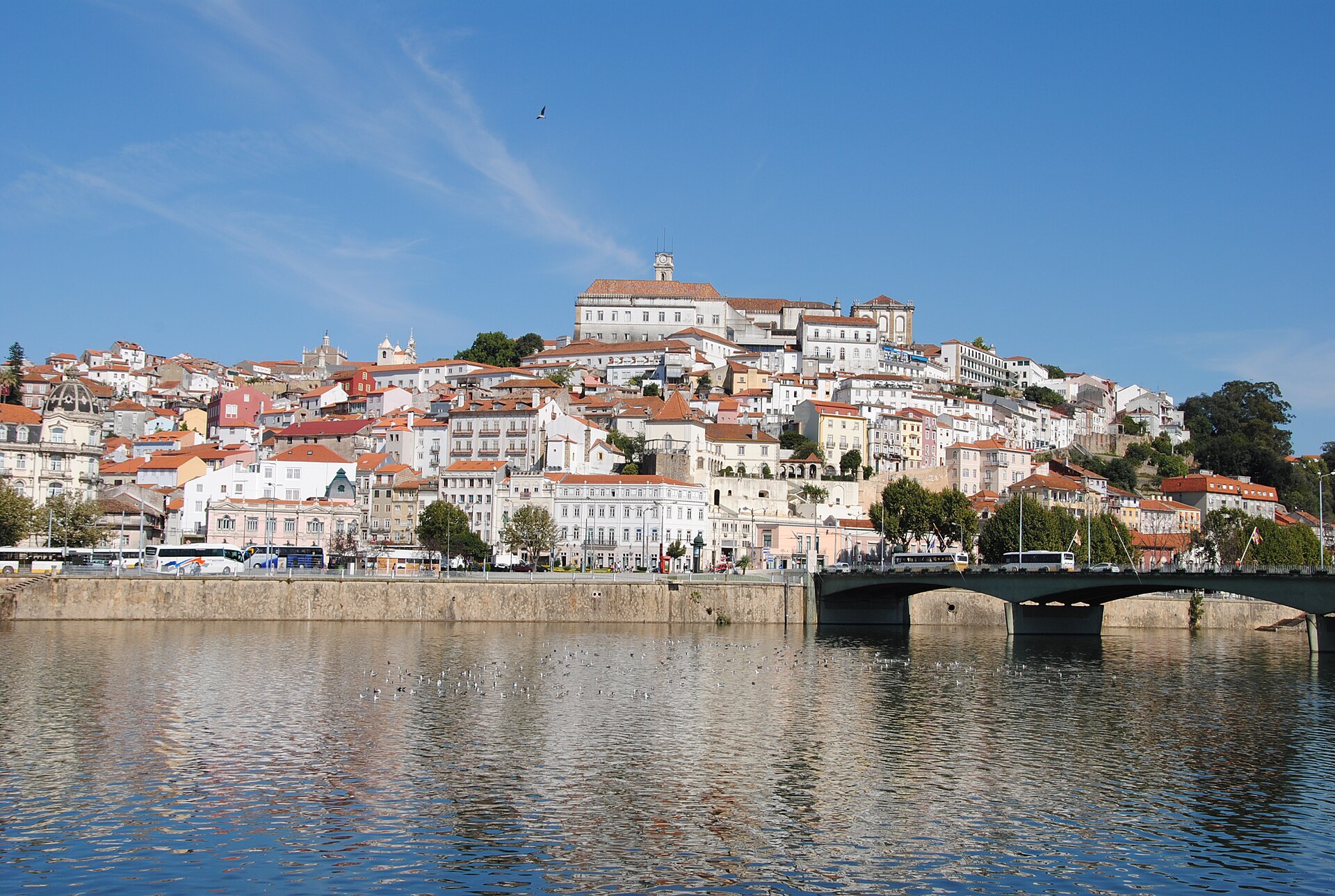
Coimbra was the capital of the new kingdom and home to its first kings. When Portugal was founded around 1139, Lisbon was still under Moorish rule, and it was from here that the early monarchs ruled. The University, founded in 1290, is the oldest in the country and a UNESCO World Heritage Site since 2013, and it still sets the rhythm of the place: a living student city, with the black caped academic tradition, the fado de Coimbra sung by men, and a hilltop old town, the Alta, climbing in stairs and lanes above the Mondego river.
That hill matters for expectations. Coimbra is compact but steep, best seen on foot, and the headline sights, the University, the Old Cathedral, the monastery of the kings, sit close together at the top. It is not a beach town or a wine day. It is history and architecture, dense and walkable, with one world class library at its centre. Get the library timing right and it is one of the best days out of Lisbon. Treat it as a quick photo stop bolted onto somewhere else and you miss why it matters.
How to get to Coimbra from Lisbon
Coimbra sits about 200 km north of Lisbon, a drive of roughly two hours each way on the A1 motorway, tolls included. It is almost exactly halfway to Porto, which is why it works so well as a stop on a longer journey north.
There are good trains: fast Alfa Pendular and Intercidades services from Lisbon reach Coimbra in about an hour forty to two hours, arriving at Coimbra-B on the edge of town, from where a short connecting train or a taxi brings you to the centre. Trains are the cheaper, greener option if Coimbra is your only goal and you are happy to walk the hills. The catch is the same one every day tripper meets: the timed library slot. By train you are tied to a timetable that may not line up with the entry printed on your ticket, and a single delay can cost you the room you came for. On a private tour you are collected at your hotel, the slot is pre-booked, and the whole day is built backwards from that fixed time.
The University and the Joanina Library: what to see
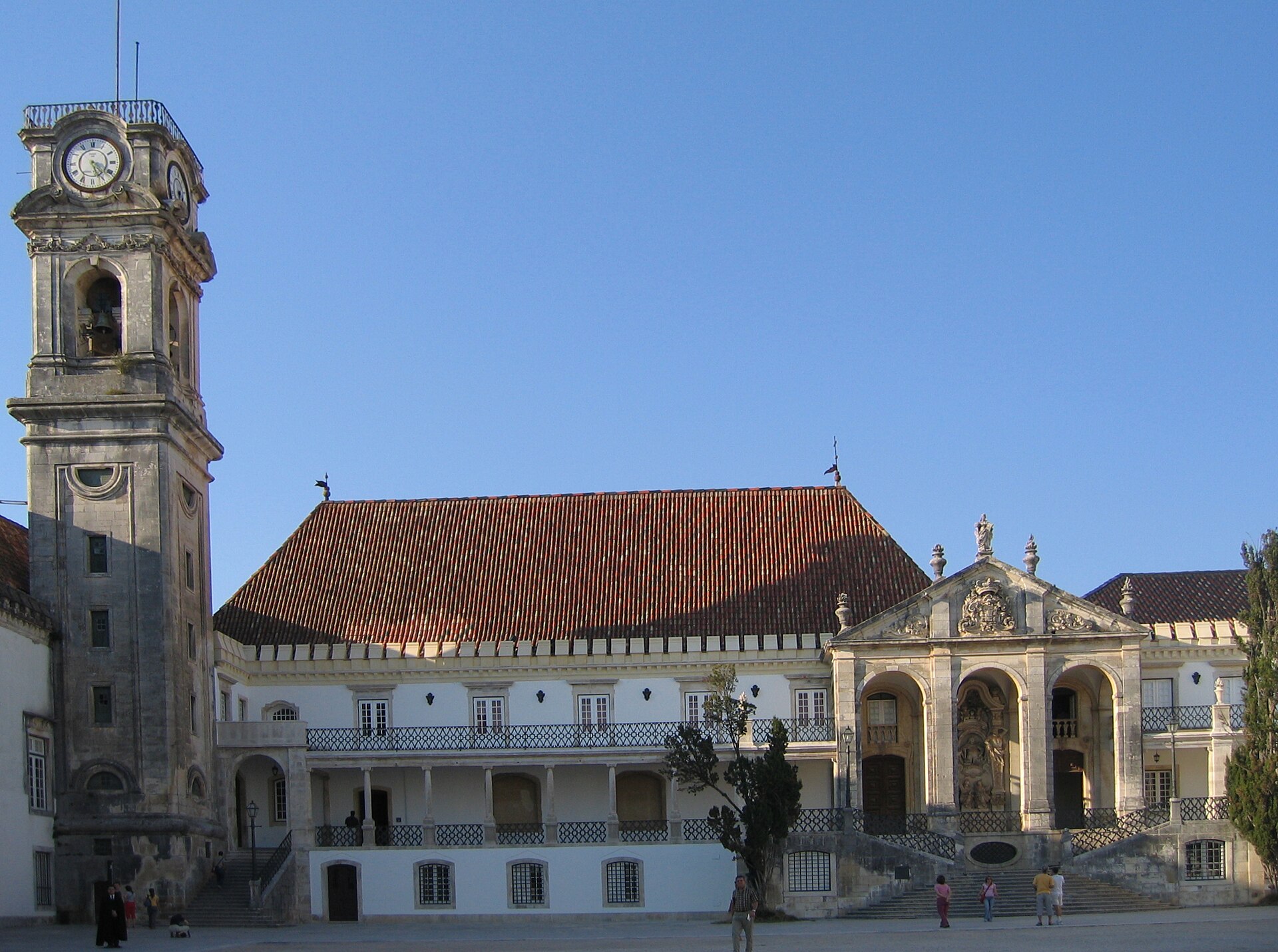
The centrepiece is the Paço das Escolas, the old royal palace turned university courtyard at the top of the hill. The combined University ticket, 13.50 euros for adults in 2026, covers the Joanina Library, St Michael's Chapel and the Royal Palace, plus the Baroque Laboratório Chimico in the Science Museum. One honest note: the University Tower, the famous bell tower, is currently closed to visitors, so do not plan the climb.
The Joanina is the reason to come. Completed in 1728 under King John V, it holds about 60,000 books printed between the 16th and 18th centuries across three halls lined in gilded, painted shelving, its outer walls more than two metres thick to keep the climate steady, and a resident colony of bats that come out at night to eat the insects that would otherwise destroy the paper. Beneath it sits the oldest surviving academic prison in Portugal. Your time inside the Noble Floor is a short, fixed slot, and no photography is allowed there, to protect the books and the gilding.
The kings, the cathedral, and where the nation is buried
Two more sights anchor the old town, both walkable from the university. The Sé Velha, the Old Cathedral, consecrated in 1184, is the finest Romanesque cathedral in Portugal, a building that looks more like a fortress than a church, with a Renaissance side portal, the Porta Especiosa, carved by Jean de Rouen. Entry is about 2.50 euros for the church and cloister.
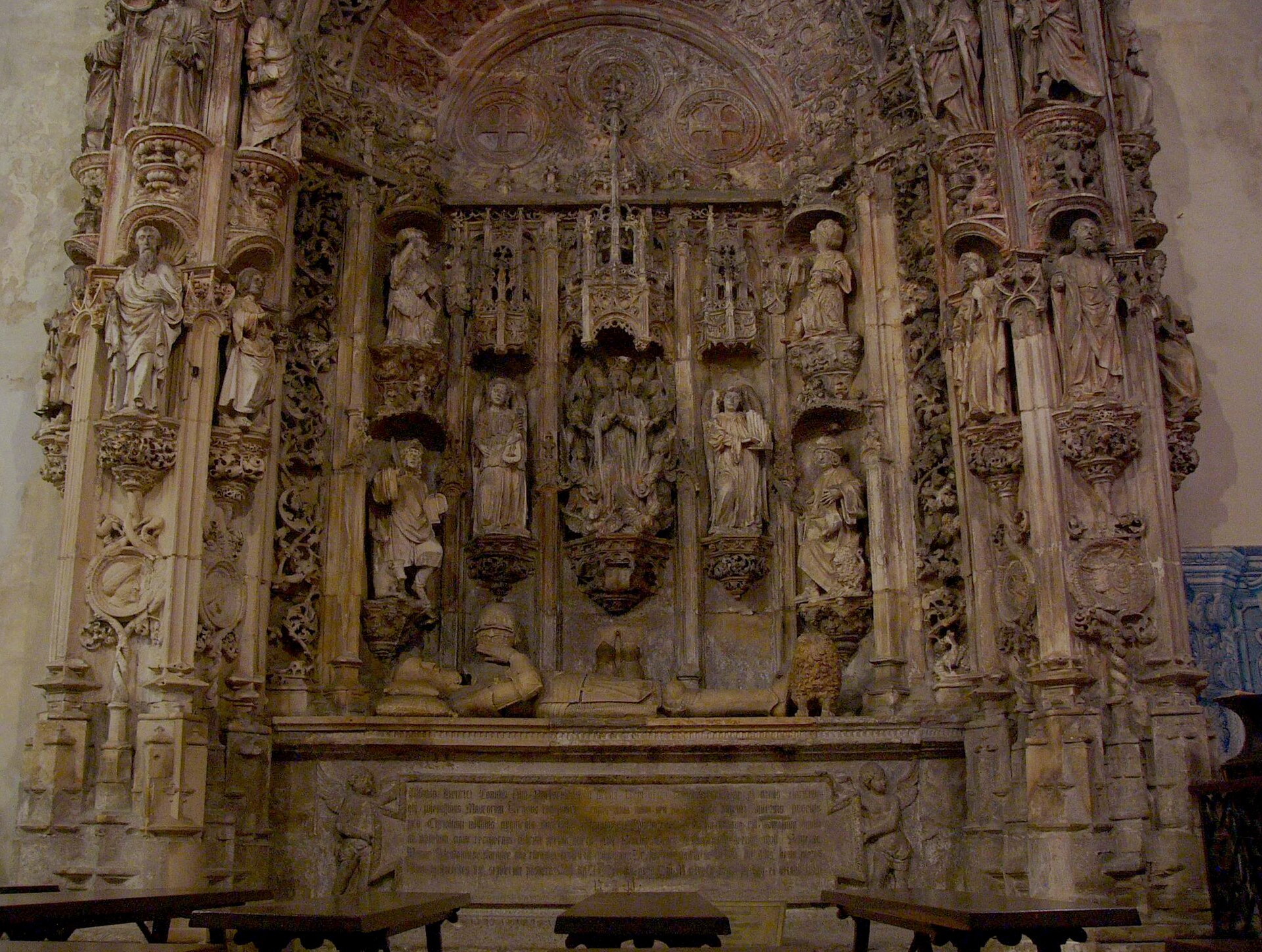
The Monastery of Santa Cruz, on Praça 8 de Maio, is where the story closes the loop. Founded in 1131, it is a National Pantheon, and it holds the tombs of Portugal's first two kings, Afonso Henriques and his son Sancho I, moved into their carved Manueline tombs under King Manuel I in the early 16th century. The church is free; the sacristy and cloister cost a couple of euros. Standing at the tomb of the first king, in the city he ruled from, is the moment the phrase "where Portugal began" stops being a slogan.
The timed Joanina slot, and why it is the whole game
Here is the part the listings skip. The University does not sell a library only ticket, and it does not let you wander into the Joanina when you arrive. When you buy, you choose a date and a time, and that time is your entry to the library, with the last admission at 17:40. You are asked to be there five minutes before, and if you miss the slot you lose that entry; there is no later one and no refund. The other spaces, the Palace, the chapel, the Science Museum, are flexible and the ticket is valid for two days, but the library is a fixed, short window.
For an independent visitor that is a real trap. Buy late in summer and the good slots are gone. Build your own day around a train and you risk arriving after your time. Even with the right ticket, people lose the slot to a long lunch or a wrong turn in the lanes. On a private tour we reserve the Joanina slot the moment you book and sequence the entire day around it: the drive up from Lisbon, the cathedral, Santa Cruz and lunch all fall into place around that one fixed hour, with no rush and nothing wasted. It is the same move as pre-booking the timed Pena Palace tickets in Sintra, and it is the difference between seeing the most beautiful library in the world and standing outside it.
Is Coimbra worth it if you are not a history buff?
Be honest with yourself about why you are going. If you love old libraries, university towns, Romanesque stone and the deep story of a country, Coimbra is unmatched in Portugal and an easy yes. If your taste runs more to landscape, beaches or wine, Coimbra on its own can feel academic, and you may be happier pairing it with something else or choosing a different day out of Lisbon. The library carries the day for most visitors; the rest is the reward for people who like history with their architecture.
Coimbra or Aveiro from Lisbon?
This is the comparison almost everyone runs, so here it is straight. Aveiro, often sold as the "Portuguese Venice", is the crowd pleaser: colourful moliceiro boats on the canals, ovos moles to eat, an easy and photogenic couple of hours, and it is the pairing most group tours bolt onto Coimbra. Coimbra is the heavier, older, more rewarding half: the university, the library, the cathedral, the kings. If you want light and pretty, Aveiro delivers. If you want the thing that makes the centre of Portugal matter, that is Coimbra, and we build our day around its depth rather than racing two towns in an afternoon.
Group tour or private?
A group coach is cheaper per person and runs to a fixed schedule, usually with a guide splitting commentary across several languages and a clock that is not yours. A private tour costs more, but it is built around you: hotel pickup, your pace, your language, and, decisively here, your Joanina slot pre-booked and the day sequenced around it. For a destination whose centrepiece is a timed, sell out entry two hours from Lisbon, private is where the money earns its keep. It is the difference between hoping the slot works out and knowing it will.
How to plan your day
We build the day two ways, and the only real question is whether you want the Roman detour.
| Coimbra | Coimbra & Conímbriga | |
|---|---|---|
| The day | University and Joanina, Old Cathedral, Santa Cruz and the old town, about 10 hours | The Coimbra day plus the Roman ruins of Conímbriga, about 11 hours |
| Best for | First timers who want the library and the city where Portugal began | Travellers who want Roman history and mosaics, away from the Aveiro crowds |
| From, 2 guests, direct | 570 euros | 609 euros |
| Always included | Timed Joanina slot, all monument tickets, hotel pickup, private driver-guide | Same, plus Conímbriga entry |
What else you can see nearby
Coimbra pairs naturally in two directions. Sixteen kilometres south lie the Roman ruins of Conímbriga, the best preserved Roman city in Portugal, which we offer as a longer version of the day for travellers who want depth over crowds. And because Coimbra sits halfway up the A1, it is the obvious stop on a Lisbon to Porto journey, or a pairing with Fátima on the way north. Each of these is its own private tour from Lisbon, or a custom day with a private driver.
Our honest recommendation
If it is your first time, take the core day: the University and the Joanina, the Old Cathedral, and the tombs of the kings at Santa Cruz, with the library slot handled for you. If Roman history pulls at you, add Conímbriga and its mosaics, and give the day the extra hour it needs. Whatever you choose, the single thing that makes or breaks Coimbra is that timed library entry, so let someone book it and plan around it. Book direct with us and the whole day is handled, from your hotel door and back.
Ready to go? See our private Coimbra tour from Lisbon.
Frequently asked questions
How far is Coimbra from Lisbon, and how long is the drive?
Coimbra sits about 200 km north of Lisbon, roughly a two hour drive each way on the A1 motorway, tolls included. It lies almost halfway to Porto. Fast trains also run from Lisbon in about one hour forty to two hours. Most private day trips travel by road. Source: Swingo and CP.
How does entry to the Joanina Library work, and do I need a timed ticket?
Yes. The University sells no library only ticket, and entry to the Baroque Joanina is by a slot with the date and time fixed when you buy. The time on your ticket is your library entry, with last admission at 17:40; arrive five minutes early, as a missed slot is lost. Source: visit.uc.pt.
How much is the University of Coimbra ticket, and what does it include?
In 2026 the combined adult ticket is 13.50 euros, with reductions for seniors and youths and free entry for children under seven. It covers the Paço das Escolas (the Joanina Library, St Michael's Chapel and the Royal Palace) plus the Laboratório Chimico, and is valid for two days. Source: visit.uc.pt.
Why is Coimbra historically important?
Coimbra was the capital of the young kingdom and home to its first kings, when Portugal was founded around 1139 and Lisbon was still under Moorish rule. Its university, founded in 1290, is the oldest in the country and a UNESCO World Heritage Site since 2013. The first two kings are buried at the Monastery of Santa Cruz. Source: VisitPortugal.
What is the Joanina Library?
The Biblioteca Joanina is a Baroque library at the University of Coimbra, completed in 1728 under King John V. It holds around 60,000 books from the 16th to 18th centuries across three gilded halls, with outer walls over two metres thick and a resident colony of bats that protect the paper from insects. An academic prison lies beneath. Source: visit.uc.pt.
Can you take photographs inside the Joanina Library?
No. Photography and video are not permitted on the Noble Floor of the Joanina, to protect the centuries old books, gilding and ceiling paintings from light. You can photograph many of the other university spaces, following the signs and staff guidance. Flash is not allowed anywhere inside the monuments. Source: visit.uc.pt.
Is Conímbriga worth visiting, and how far is it?
Conímbriga is the best preserved Roman city in Portugal, about 16 km south of Coimbra. Highlights include the mosaic floors and water garden of the House of the Fountains and a 3rd century defensive wall. The site and museum open daily 10:00 to 18:00, with the ticket office closing at 17:15; adult entry is 10 euros. Source: Museu Nacional de Conímbriga.
Is the University Tower open to visitors?
Not at present. The University of Coimbra's bell tower, normally a 184 step climb for city views, is currently closed to the public, so it is best left out of your plans. The Joanina Library, St Michael's Chapel and the Royal Palace at the Paço das Escolas remain open as usual. Source: visit.uc.pt.
When is the best time to visit Coimbra, and what should I avoid?
Spring and autumn are most comfortable, and summer is busy with library slots selling out early. Watch the student calendar: the university's tourist circuit closes for academic festivities such as the Queima das Fitas in May and the Latada in October, when ceremonies override visits. Booking ahead protects your library slot. Source: visit.uc.pt.
Private or small-group tour for Coimbra: what is the difference?
A small group tour shares a vehicle and a fixed pace, with commentary often split across languages. A private tour is just your party, in your language, at your pace, and your timed Joanina Library slot is pre-booked with the day sequenced around it, rather than risking a sold out or rushed visit. Source: Swingo.
How much does a private Coimbra tour from Lisbon cost?
Swingo's private Coimbra day tour starts at 570 euros for two on the website Direct rate, covering the University and Joanina Library, the Old Cathedral and Santa Cruz, with all monument tickets included and hotel pickup. The longer day adding the Roman ruins of Conímbriga starts at 609 euros. Source: Swingo.
What else can you combine with Coimbra from Lisbon?
The natural add is Conímbriga, 16 km south, for Roman mosaics and ruins. Because Coimbra is roughly halfway up the A1, it also pairs well as a stop on a Lisbon to Porto journey, or with Fátima on the way north. Each is available as a private tour or a custom day with a driver. Source: Swingo.
Last updated . Opening hours, prices and access rules are checked against official sources.
See Coimbra with a local.
The UNESCO university and its Baroque Joanina Library, the royal tombs at Santa Cruz, and optional Conímbriga, with your timed library slot pre-booked and hotel pickup.
Discover the Coimbra tour