

Founder & CEO of Swingo
Belém sits six kilometres west of central Lisbon, and it is where most Lisbon days go wrong. The two monuments everyone comes for now run on timed tickets and a daily cap, so a queue can swallow two hours. The centre you can improvise. Belém you cannot, and the difference is planning.
Lisbon looks easy until you reach Belém. The city sells itself as sunshine, trams and custard tarts, and most of it really is that forgiving. Then you drive six kilometres west to the two monuments everyone came to see, and the day you pictured meets a two-hour queue and a daily ticket cap. That single strip of riverfront is where more Lisbon days go wrong than anywhere else.
We have been running private Lisbon tours for years, so this guide is written from the road, not from a brochure. Here is how to reach Belém, what is genuinely worth your time, what the typical day gets wrong, and how to see the capital in a day that breathes instead of races.
First, what Lisbon actually is
Lisbon is a river city built on hills, and that shapes everything. The historic centre is walkable but steep, and it really has two poles, not one. To the east of the centre sits the old city: Alfama's tangle of lanes, the great viewpoints, and the castle on the highest hill. Six kilometres to the west, along the Tagus, sits Belém, the monumental quarter of the Discoveries.
The mistake is treating all of it as one easy blur. The centre and Alfama you can largely improvise. Belém you cannot, because the two monuments there now run on timed tickets and capped numbers, and getting between the two poles eats time if you wing it. Get Belém right and the rest of Lisbon is one of the most generous cities in Europe. Get it wrong and you spend your best hours in a line.
The Belém problem, and why it decides your day
This is the part to plan around. Belém has two paid monuments that both now work on controlled, timed entry, and they sit about six kilometres from the centre.
The Jerónimos Monastery is the Manueline masterpiece, and its own official ticketing warns that in busy periods the entry queue can pass two hours. The church of Santa Maria de Belém, which holds the tombs of Vasco da Gama and the poet Luís de Camões, is free to enter. The cloister next door, the part that took the breath out of everyone who described it, needs a paid ticket, 18 euros for an adult in 2026, and that is where Fernando Pessoa lies. So the free church is genuinely worth ten minutes, and the cloister is the thing you book ahead for.
Next to it, the Belém Tower reopened to the public on 27 May 2026 after about a year of restoration. It came back with a new access model built to kill the old queues: timed slots, up to 60 people every half hour, capped at 900 visitors a day, open 9:30 to 17:30 with last entry at 17:00. The bottleneck inside is a single narrow spiral staircase, so even with a ticket you shuffle. The honest read on the Tower is below, but the booking logic is simple: on a busy day the 900 slots sell out, and a walk-up can find the day full.
The one move that changes a Lisbon day more than any other is pre-booking both Belém tickets for a set time, and driving the six kilometres in between instead of leaving it to chance. That is the whole reason this quarter sits at the centre of how we build the day.
How to get from central Lisbon to Belém
Belém is about six kilometres west of the centre, and how you cover it sets the tone. Tram 15E from Praça da Figueira is the classic route, and it works, but it is slow and often packed shoulder to shoulder in summer. The Cascais-line train from Cais do Sodré is quicker, reaching Belém station in roughly ten minutes, though the station sits a short walk from the monuments. A taxi or a Bolt runs about five to seven euros and takes you door to door.
The reason door to door matters is that Belém's sights are strung along the riverfront, not clustered. The Jerónimos, the Tower and the Padrão dos Descobrimentos are each a walk apart, with wide avenues and a railway line between them. Spend your energy on the monuments, not on the logistics.
What to see in Belém
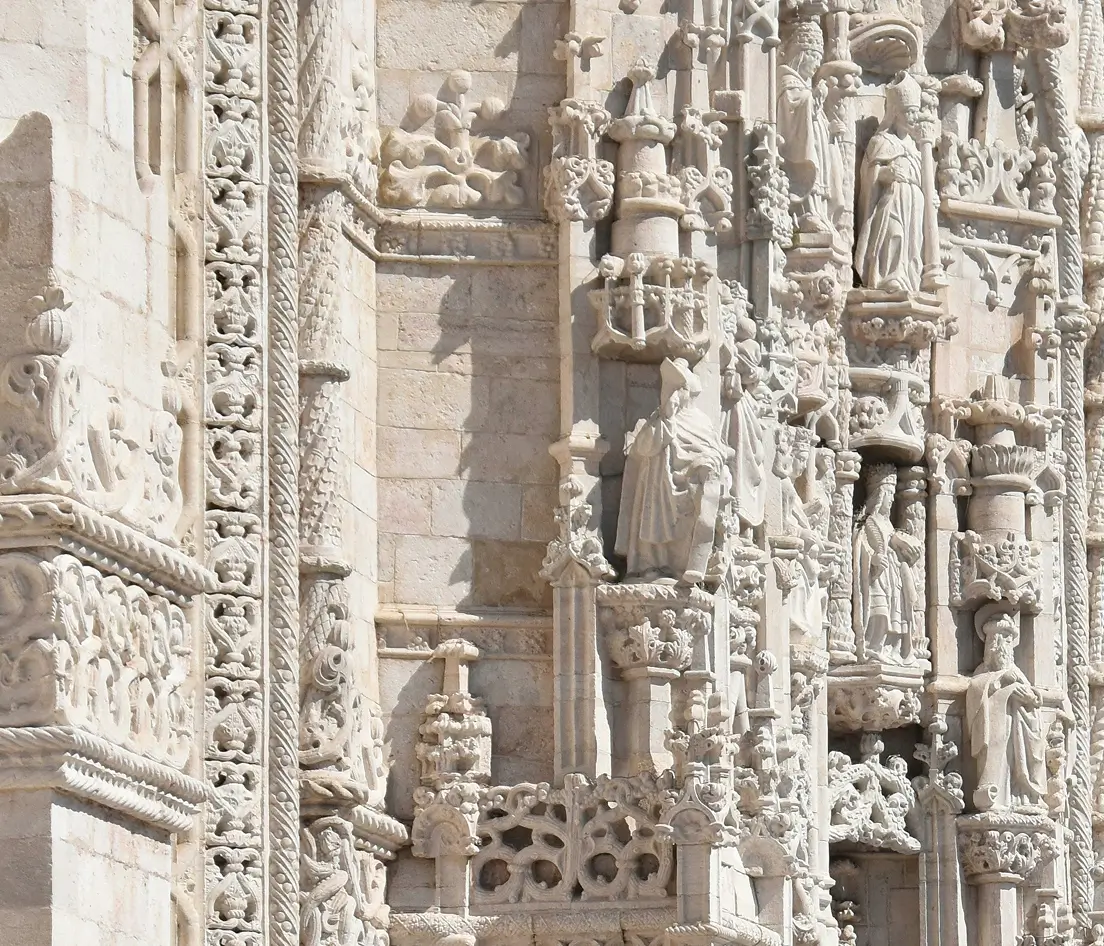
The Jerónimos Monastery is the anchor. King Manuel I commissioned it around 1501, funded partly by the wealth of the new sea route to India, and the Manueline style takes its name from his reign: stone carved with ropes, knots, armillary spheres and sea monsters. Give the free church its due for the explorers' tombs, then take your booked slot for the cloister, which is the genuine wonder.
The Belém Tower, built between 1514 and 1519 by the architect Francisco de Arruda, is the postcard of Lisbon, a fortress that stands in the river as a gateway to the Discoveries. Here is the honest part most guides skip: the Tower's magic is the exterior and the setting, the lacework of carved stone read from the promenade. Inside it is comparatively bare, four small floors reached by that tight spiral staircase. With a booked slot it is a fine thirty to forty minutes and a fair view from the terrace. Without one, on a packed afternoon, admiring it from the riverside and climbing the nearby Padrão dos Descobrimentos for a better view instead is a completely legitimate call.
Then the pastéis. The original Pastéis de Belém has been selling its custard tarts beside the monastery since 1837, from a recipe linked to the monks. Warm, dusted with cinnamon, eaten standing, they earn the hype, even if the queue and the crowds around them do not always.
Beyond Belém: Alfama, the viewpoints and the castle hill
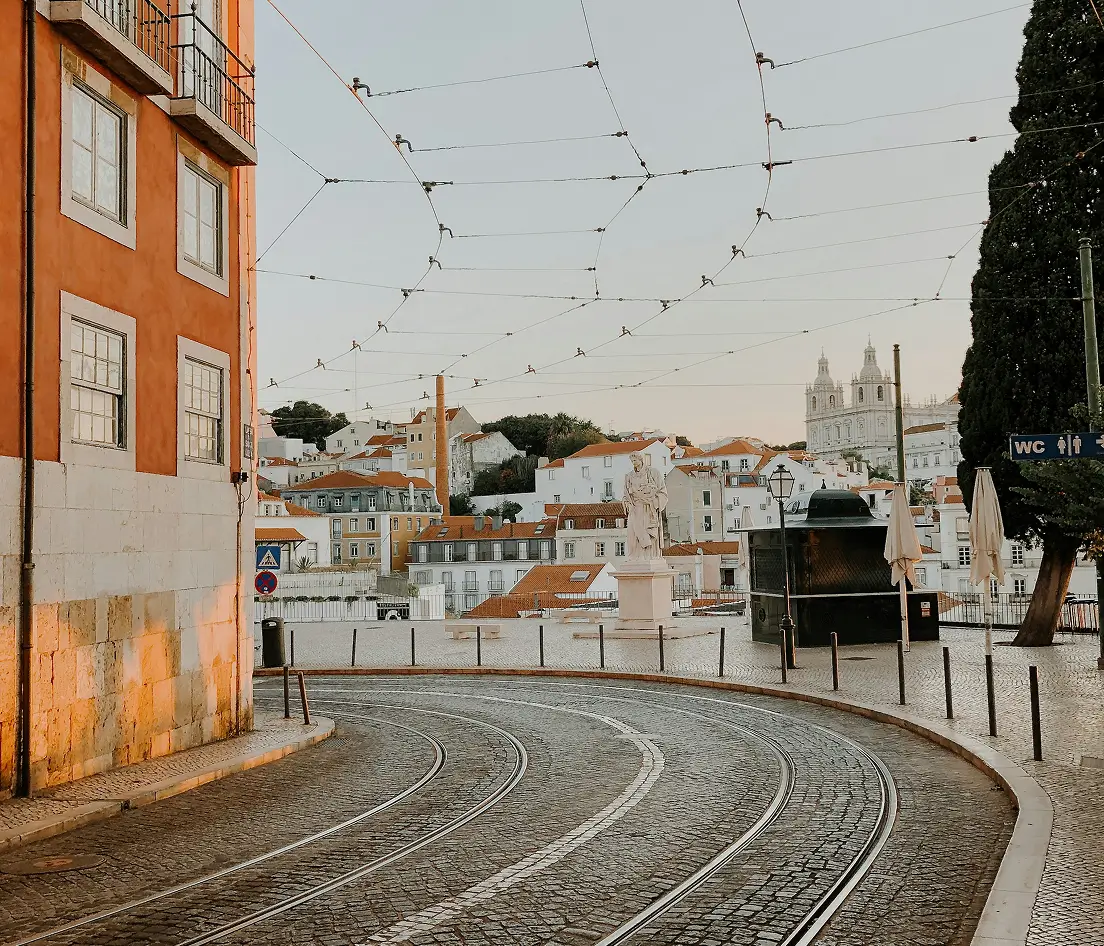
The other pole of the city is the one Belém makes you forget. Alfama is the oldest quarter, a steep maze of cobbled lanes, washing lines and tile, with the Sé cathedral at its foot and two of the best viewpoints in Lisbon, Portas do Sol and Santa Luzia, looking out over the rooftops to the river.
Above it stands the São Jorge Castle, on the highest hill in central Lisbon. It is essentially a Moorish fortress, expanded between the 8th and 12th centuries and taken by Portugal's first king in 1147, and from its ramparts almost the whole historic centre opens up below. Unlike the state monuments in Belém, the castle is open daily, roughly 9:00 to 21:00 in summer, with adult entry around 15 euros sold through the official BOL portal, and queues that build from late morning. The famous tram 28 grinds up through Alfama towards it, gloriously photogenic and reliably overcrowded.
How long you need, and when to go
One focused day covers the spine of Lisbon: Belém in the morning while it is quietest, then the viewpoints, Alfama and the castle hill in the afternoon. Two days lets it breathe, and adds room for a neighbourhood like Graça or LX Factory and a slower lunch.
Timing has a few hard edges. Both Belém monuments, the Jerónimos and the Tower, close on Mondays, while the castle stays open. Belém is busiest from midday and at weekends, so an early start there pays off twice, in shorter queues and softer light. Spring and autumn are the most comfortable seasons; high summer is hot and crowded. Whenever you come, an early start or a pre-booked timed entry is the single biggest lever on how the day feels.
Is the Belém Tower worth going inside?
It depends on how you value the interior against the queue. The carved exterior and the river setting are the masterpiece, and they are free to enjoy from the promenade. The inside is modest, austere rooms and a narrow climb to a terrace with a decent but not spectacular view. With a pre-booked slot, going in is a worthwhile thirty to forty minutes. On a day when the 900 slots are gone and the line is long, you lose more time than the inside repays, and skipping it is no great loss. We would rather tell you that than sell you a queue.
Tuk-tuk, walking, or a private tour?
Each has an honest place. A tuk-tuk is fun and made for the old-town hills, and it is cheaper and more iconic for exactly that. What it is not built for is the six-kilometre run to Belém or handling timed tickets. Walking rewards Alfama more than any vehicle, but it tires you across seven hills, and tram 28 is often too full to board.
A private Lisbon tour is not the answer to everything. If all you want is the hills and the old quarter, a tuk-tuk or your own two feet will do it for less. Where a private driver-guide earns its keep is the part that most often goes wrong: reaching Belém in comfort, holding pre-booked slots for the Jerónimos and the Tower, and managing the timing between the two poles so the day is the one you imagined.
The three ways we build the day
We run Lisbon as one product with three depths, so you choose how much day you want rather than being sold a fixed march.
- Express, about 3 to 4 hours, from 339 euros for 2 guests direct. Belém done properly, plus a panoramic stop. Belém timed tickets included. Best for layovers, cruise calls, or one focused morning.
- Half-Day, about 5.5 hours, from 240 euros for 2 guests direct. Belém plus Alfama, the castle hill and a central viewpoint. Belém timed tickets as an add-on. Best for the essentials of both Belém and the old city.
- Full-Day, about 9 hours, from 275 euros for 2 guests direct. The Half-Day with room to breathe, lunch, extra neighbourhoods, optionally the far bank. Belém timed tickets as an add-on. Best for the complete day, without a race.
One honest note on the prices. The Express looks dearer than the Half-Day, and it is, because it has both Belém tickets built into the price while the Half-Day and Full-Day sell the tour first and the timed tickets as an add-on. Short and ticketed costs more than a longer morning without tickets, which is exactly as it should be.
Group tour or private?
A group coach tour is cheaper per person and runs to a fixed timetable, usually moving a crowd through the headline stops. A private tour costs more, but it is built around you: hotel, airport or cruise-port pickup, your pace, an air-conditioned vehicle for the Belém run, and a guide who holds the timed tickets and handles the timing. For a city whose worst friction is queues and logistics, that is where private quietly pays for itself.
What else you can see nearby
Lisbon is the natural base for the best days in the region. Sintra and its palaces sit forty minutes away and reward a full guided day of their own. An evening of Fado, the city's own music, is the right way to close a day in the old quarters. And for travellers who want a flexible chauffeur rather than a guided itinerary, our Private Driver is a separate service, multi-destination and built around your plan, not a fixed route. Each exists as its own booking from the city.
Our honest recommendation
If you are short on time, on a layover or off a cruise ship, take the Express and let Belém be done properly without the full-day commitment. If it is your first proper day in Lisbon, the Half-Day covers both poles at a good pace. If you want the city without a clock, take the Full-Day. Whichever you choose, pre-book the Belém tickets, start early, and the capital is the day you pictured, not a line. Book direct with us and the whole day is handled, from your hotel door and back.
Ready to go? See our private Lisbon tour.
With one more day, the natural next step is a private Sintra tour from Lisbon, with the Pena Palace and Quinta da Regaleira tickets pre-booked so you skip the queues.
Frequently asked questions
Do I need to book Jerónimos Monastery tickets in advance?
Yes. The monastery runs on timed entry, and its own ticketing warns that peak-period queues can pass two hours. The church of Santa Maria de Belém is free, but the cloister needs a paid ticket, 18 euros for adults in 2026. Booking ahead, or joining a tour that pre-books for you, guarantees your slot. Source: museusemonumentos.pt.
How long is the queue at the Jerónimos Monastery?
It varies by hour and season. The monument's own ticketing says busy-period queues can exceed two hours just to get in. Early on a weekday is quietest, while late mornings and afternoons in spring and summer are worst. A pre-booked timed-entry ticket skips the ticket-office line, which is where most of the wait builds. Source: museusemonumentos.pt.
Is the Belém Tower open in 2026?
Yes. The Belém Tower reopened to the public on 27 May 2026 after about a year of restoration. It now uses timed entry, up to 60 people every half hour and 900 a day, open 9:30 to 17:30, last entry 17:00, closed Mondays. The single narrow spiral staircase is the bottleneck, so a booked slot is the safe way in. Source: museusemonumentos.pt.
How much do Belém's monuments cost in 2026?
Official adult admission in 2026 is 18 euros for the Jerónimos Monastery cloister and 15 euros for the Belém Tower, while the monastery church is free. Children under 12 enter free, and residents of Portugal enter free on Sundays and public holidays until 2pm. Prices change, so check the official site before you go. Source: museusemonumentos.pt.
How do I get from central Lisbon to Belém?
Belém is about 6 km west of the centre. Tram 15E from Praça da Figueira is the classic route but is often slow and packed. The Cascais-line train from Cais do Sodré reaches Belém in about ten minutes. A taxi or Bolt is faster and door to door, which matters because Belém's sights spread along the riverfront. Source: Carris.
Can you see Lisbon in one day?
You can see the highlights well in one focused day: Belém in the morning, then the central viewpoints and Alfama in the afternoon. Adding the Coach Museum, Parque das Nações and the far-bank Cristo Rei on top usually feels rushed. A clear spine at a calm pace beats a long checklist done at speed. Source: Swingo.
What is the best way to see Lisbon: tuk-tuk, walking or a private tour?
A tuk-tuk is fun and handles the old-town hills, but it is small and weak for the 6 km run to Belém. Walking rewards Alfama but tires you across seven hills. A private tour adds comfort, reaches Belém easily, and handles the timed Belém tickets, which is the thing that most often goes wrong. Source: Swingo.
How hilly and walkable is Lisbon?
Lisbon is built on hills, and old districts like Alfama are steep, with cobbles and steps. It rewards walking but tires you, and tram 28 gets very crowded. Comfortable shoes matter. For visitors with limited mobility, a private vehicle that drops you close to each sight makes the city far more manageable. Source: Swingo.
Do you need a ticket for São Jorge Castle?
Yes. São Jorge Castle has paid entry, around 15 euros for adults, and unlike the state monuments it opens daily, roughly 9:00 to 21:00 in summer. Queues build from late morning, so buy online ahead through the official BOL portal. On a private tour you take in the castle-hill viewpoints and Alfama, and add the interior yourself. Source: castelodesaojorge.pt.
What can you do in Lisbon on a cruise stop or layover?
With four to eight hours, focus on one area done well. From the cruise terminal, Alfama and the central viewpoints are close. With more time, add Belém and the Jerónimos Monastery, with a pre-booked ticket so the queue does not cost you the visit. A private transfer synced to your ship or flight removes the risk of running late. Source: Swingo.
When is the best time to visit Belém and Lisbon?
Belém is busiest from midday and at weekends, and both the Jerónimos Monastery and the Belém Tower close on Mondays. Early on a weekday is calmest, and spring and autumn are the most comfortable seasons. Whenever you go, an early start or a pre-booked timed entry makes the biggest difference to the day. Source: museusemonumentos.pt.
Where are the pastéis de Belém, and are they worth it?
The original Pastéis de Belém has sold its custard tarts beside the monastery since 1837, from a recipe linked to the Jerónimos monks. The takeaway queue moves fast, while the sit-down room is slower. They are genuinely good, though nearby cafés bake fine ones too, so treat it as ritual rather than obligation. Source: Pastéis de Belém.
Sources
Museus e Monumentos de Portugal (museusemonumentos.pt) for the Jerónimos Monastery and Belém Tower hours, prices, closing days and timed-entry rules, and for the Tower's reopening and daily cap; reporting by Lusa, Público and Observador for the Tower's 27 May 2026 reopening and access model; Castelo de São Jorge (castelodesaojorge.pt) for the castle's hours, price and ticketing; and Carris for the tram and train routes to Belém. Figures and dates verified June 2026.
Last updated . Opening hours, prices and access rules are checked against official sources.
See Lisbon with a local.
From Alfama to Belém at your own pace, with hotel pickup and a private driver-guide who knows the city.
Discover the Lisbon private tour